
Winter vegetables are loaded with essential nutrients that help support immunity and overall health during the colder months — especially when cold and flu rates tend to rise.
Seasonal produce like root vegetables, cruciferous vegetables, leafy greens, and winter squash are rich in:
- Vitamin C for immune support
- Vitamin A (beta-carotene) for immune and eye health
- Fiber for digestive health
- Antioxidants that help reduce inflammation
- Potassium and magnesium for overall balance
These nutrients work together to support the body when stress, limited sunlight, and seasonal illnesses are more common.
Why Choose Butternut Squash?
Butternut squash is one of the most nutrient-dense winter vegetables available. It provides:
- High levels of beta-carotene (vitamin A precursor)
- Vitamin C
- Fiber
- Natural sweetness without added sugar
Its creamy texture and mild flavor make it easy to incorporate into a wide variety of meals.
Seasonal eating is one of the simplest ways to align your nutrition with what your body needs most. Winter vegetables aren’t just hearty — they’re functional.
Below, you’ll find a delicious butternut squash stew recipe to help you bring these immune-supporting nutrients into your kitchen this season.
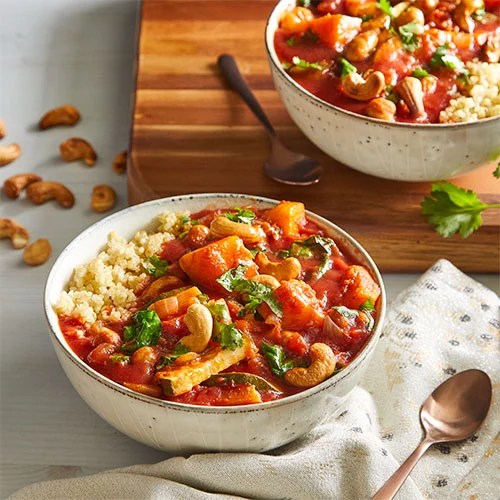
Roasted Butternut Squash Stew
Ingredients
- 1 small butternut squash, peeled and cut into cubes (about 3 cups/750 mL)
- ½ tsp (2 mL) salt, divided
- 1½ tsp (7 mL) or Pumpkin Pie Spice
- Optional: ⅛ tsp (0.5 mL) ground cayenne pepper
- 1 medium onion
- 1 medium zucchini
- 2 garlic cloves, pressed
- 1 can (28 oz. /796 mL) crushed tomatoes
- 1 can (15 oz./450 mL) chickpeas, drained and rinsed
- 1½ cup (375 mL) low-sodium vegetable broth
- 2 cups (500 mL) baby spinach leaves
- 2 cups (500 mL) cooked quinoa
- Optional Toppings: Roasted cashews, chopped cilantro, plain yogurt, hot sauce
Directions
- Preheat the oven to 400°F (200°C). Combine the squash, 1 tbsp (15 mL) of the oil, ½ tsp (2 mL) of the pumpkin pie spice, ¼ tsp (1 mL) of the salt, and the cayenne (if using), in a medium bowl.
- Place the squash in a single layer on a sheet pan. Bake until tender and beginning to brown, about 20 minutes.
- Meanwhile, coarsely chop the onion and slice the zucchini into ¼” (6-mm) half-moons.
- Heat the remaining oil in a large pot over medium-high heat. Add the onion and remaining salt and cook until softened, about 3 minutes. Add the garlic and cook until fragrant, about 1 minute. Add the remaining pumpkin pie spice; cook and stir for 30 seconds.
- Stir in the tomatoes, chickpeas, zucchini and broth. Bring to a boil, then reduce the heat and simmer for 5 minutes.
- Gently stir in the squash. Simmer for 5 minutes. Remove from the heat; add the spinach and stir until wilted.
- Serve over cooked quinoa with optional toppings, if you like. Cilantro and cashews are highly recommended!
Yield
4 Servings
Nutrients per serving:
U.S. nutrients per serving: Calories 420, Total Fat 9 g, Saturated Fat 1 g, Cholesterol 0 mg, Sodium 970 mg, Carbohydrate 75 g, Fiber 17 g, Total Sugars 18 g (includes 0 g added sugar), Protein 17 g
Tips:
Save some time by using store-bought fresh or frozen squash that’s already peeled and cut. Frozen squash won’t get as browned as fresh, but a preheated sheet pan will help.
Easy Change-Ups
Serving Ideas: No quinoa? It’ll be just as delicious over rice, couscous, or toasted naan.
Simple Swaps: This recipe is so flexible. You can substitute cannellini beans for the chickpeas, sweet potatoes for the butternut squash, and broccoli or cauliflower florets for the zucchini.
Adapted from: Roasted Butternut Squash Stew

 Varying Veggies